
White Dog with Pastels

Lessons
About This Lesson Series...
In this series of lessons, students explore the nuanced and rewarding process of drawing a white dog—a Dalmatian—using pastels and pastel pencils on gray PastelMat paper. The lessons focus on the unique challenge of rendering a white subject against a white background, a scenario that demands careful observation, subtle value control, and thoughtful color placement. Matt guides students step-by-step through understanding how to keep a primarily white composition visually engaging by relying on delicate temperature shifts, gentle transitions, and strategic mark-making.
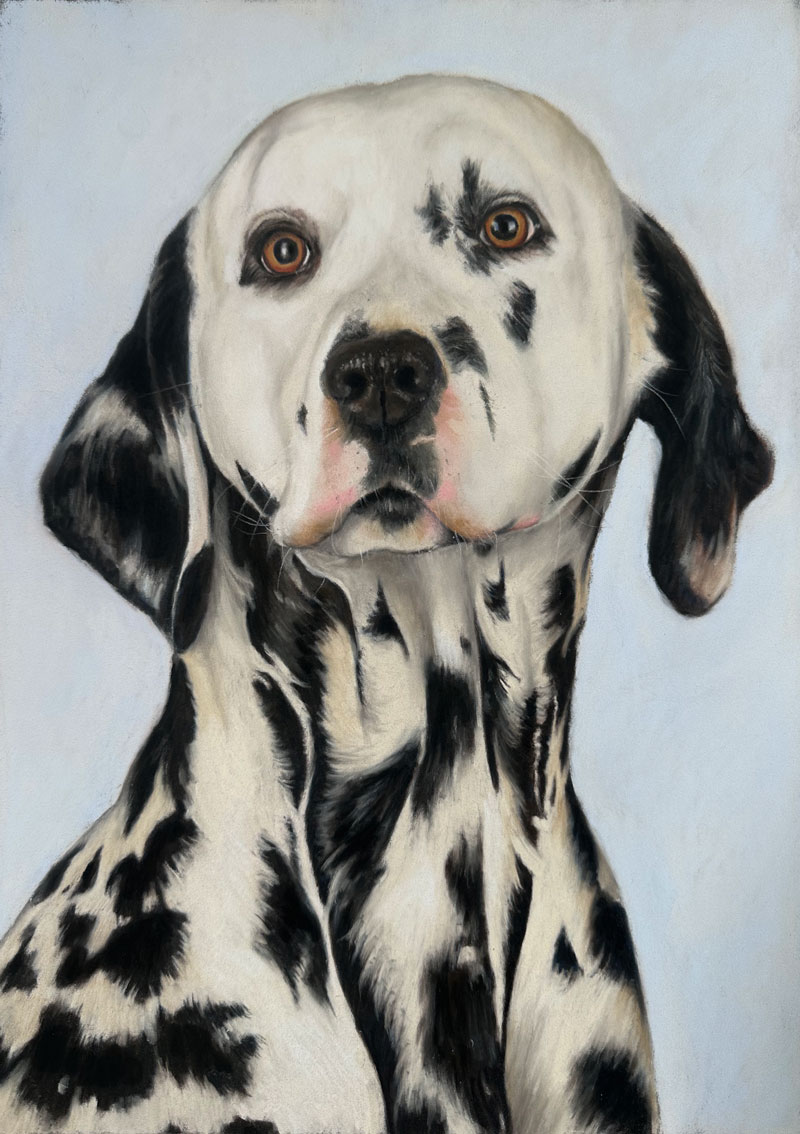
Understanding White on White: Establishing Subtle Value Relationships
The first portion of the series emphasizes the importance of value when working with light subjects and backgrounds. Students learn that even in a “white” subject, there are countless shades of warm and cool grays, creams, and soft blues. Matt explains how the mid-toned gray PastelMat paper becomes an essential tool—it allows both highlights and shadows to be developed gradually, preventing the drawing from appearing washed out. Through demonstrations, he shows how to identify the darkest accents in the dog’s fur, spots, and facial features, as well as how to reserve the lightest areas for the brightest pastel applications.
Layering Pastels and Developing Texture
As the lessons progress, students begin layering soft pastels and pastel pencil strokes to build the Dalmatian’s form and texture. Matt explains his process for achieving the soft, short-haired look of the dog, using controlled strokes that follow the direction of the fur. He also discusses the importance of using both broad pastel applications and refined pencil details to create a balance between softness and clarity. Throughout the layering process, students explore subtle temperature shifts—slightly warmer tones around the ears and eyes, cooler tints in the shadows, and gentle transitions where the face curves into the neck and body.
Rendering the Dalmatian’s Spots and Facial Features
A defining characteristic of a Dalmatian is, of course, its bold spots. Matt demonstrates how to render these markings without overwhelming the delicate color harmony of the drawing. Students learn how to maintain soft edges where appropriate and sharpen others to create focus. Special attention is given to the dog’s eyes, nose, and mouth—areas where contrast and detail bring the portrait to life. By carefully building dark values while preserving the underlying structure, Matt shows how to achieve expression, roundness, and realism.
Creating a Harmonious White Background
Since the background is intentionally white, Matt guides students on how to avoid making it appear flat or disconnected from the subject. Soft pastel applications, gentle blending, and tiny shifts in tone help the background feel luminous rather than empty. The goal is a seamless interaction between the dog and its surroundings, allowing the white elements to complement—not compete with—each other.
Final Refinements and Finishing Touches
The series concludes with final adjustments to enhance contrast, refine edges, and strengthen the overall composition. Students learn how to evaluate their work for balance, subtlety, and clarity. Matt encourages artists to look closely at color relationships and ensure that every stroke contributes to the realism and elegance of the finished piece. The completed drawing highlights not only the beauty of the Dalmatian but also the sophisticated use of subtle color in a predominantly white subject.
Specific Lessons
Lesson 1 (1:08:44)
In lesson one, we discuss the materials, draw the contours with a white pastel pencil, and begin the details of the left eye.
Lesson 2 (1:00:25)
In lesson two, we begin with pastel applications to the ear. As we do so, we discover a nice mixture to create a natural, more colorful black.
Lesson 3 (1:05:11)
In lesson three, we address the nose and snout of the dog and add subtle highlights and shadows to the left side of the head.
Lesson 4 (1:13:02)
In lesson four, we work to the right side of the head of the dog, addressing the second eye and surrounding textures.
Lesson 5 (1:06:23)
In lesson five, we work back towards the snout and add highlights and subtle shadows to the right side of the head.
Lesson 6 (1:02:18)
In lesson six, we develop the right ear and lower lip and mouth of the dog.
Lesson 7 (1:09:02)
In lesson seven, we begin drawing the spots on the left side of the body of the dog.
Lesson 8 (1:13:54)
In lesson eight, we begin continue drawing spots on the center of the body of the dog.
Lesson 9 (1:01:46)
In lesson nine, we begin continue drawing spots on the right side of the dog.
Lesson 10 (1:01:54)
In lesson ten, we complete the drawing.
Resources for this Lesson...
Distributing any content downloaded from this site is strictly prohibited and against the terms and conditions of use.
References
Here's what you'll need...
(Disclosure: Links to art materials are affiliate links which means we make a small commission if you purchase at no additional cost to you.)

Founder of The Virtual Instructor, artist and teacher. Matt makes learning art easy to understand and enjoyable.
when does the 2nd lesson get posted have to catch up
Hi Rosann,
The recorded version is posted a day or two after the live broadcast. The video must be edited, exported, and uploaded. Then the page must be coded for the new lesson. I just published lesson 2.
thanks love all your lessons